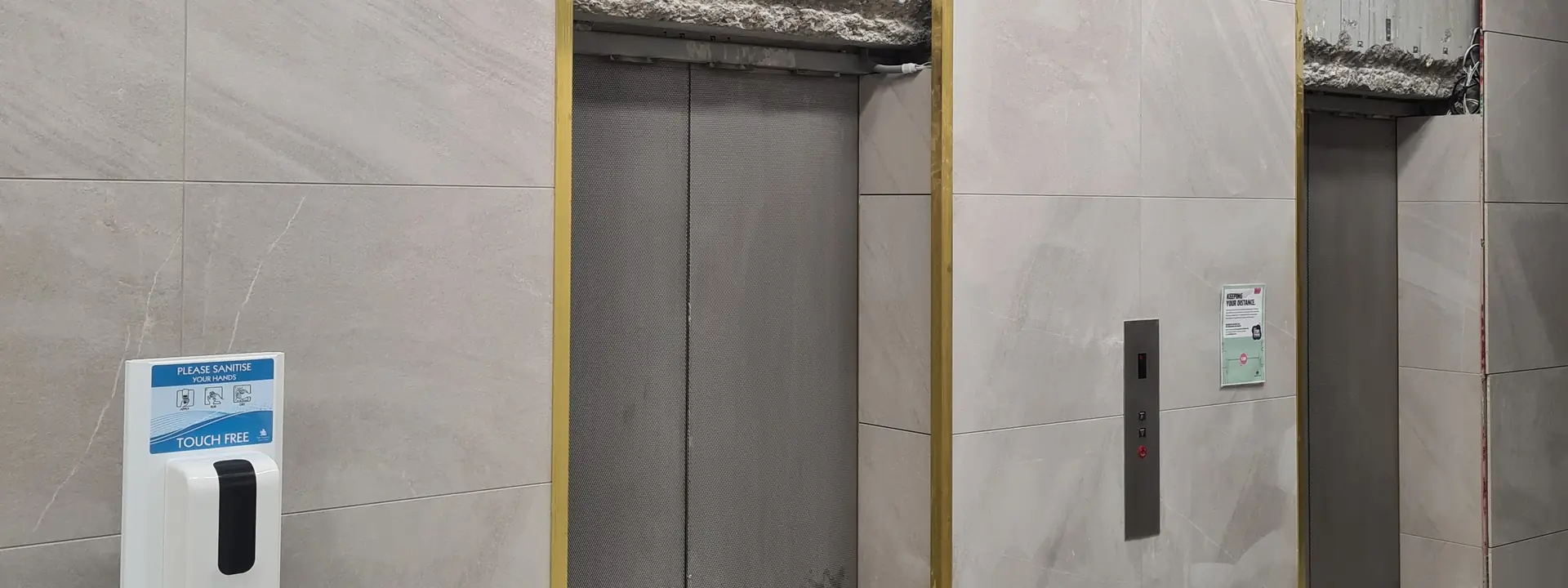
Bathrooms & ensuites
Shower recesses full height, floors in their entirety, and wall junctions reinforced before the tile goes on.
Waterproofing failures almost never come from the middle of a wall. They come from junctions — where the floor meets the wall, around the waste, at the hob, behind the tap penetrations. Those are the points that need reinforcing, and they are the ones most often rushed.
We prime the substrate, install bond breakers at movement junctions, reinforce internal corners, then build the membrane up in coats to the required height — full-height in the shower, and up the walls elsewhere as the standard sets out. Then it gets left alone to cure before anything is tiled over it.
We work to AS 3740 for internal wet areas and AS 4654 for external above-ground work like balconies and terraces.
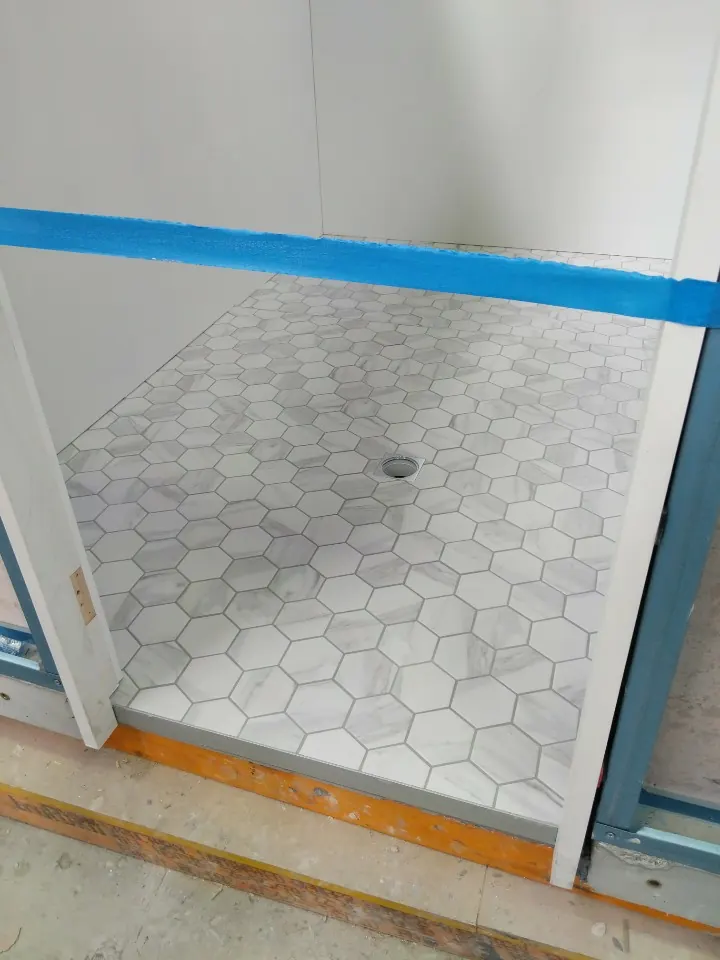
Shower recesses full height, floors in their entirety, and wall junctions reinforced before the tile goes on.
Smaller wet areas still need a membrane under the tile and around the trough or floor waste.
Above-ground external membranes with falls to drainage, upturns at doors and correctly detailed edges.
Constant-contact areas that need a system rated for permanent moisture, not a bathroom membrane.
Tanking to below-grade walls and podium slabs where water is pushing from the other side.
Diagnosing where water is actually entering and rebuilding the affected area rather than patching the symptom.
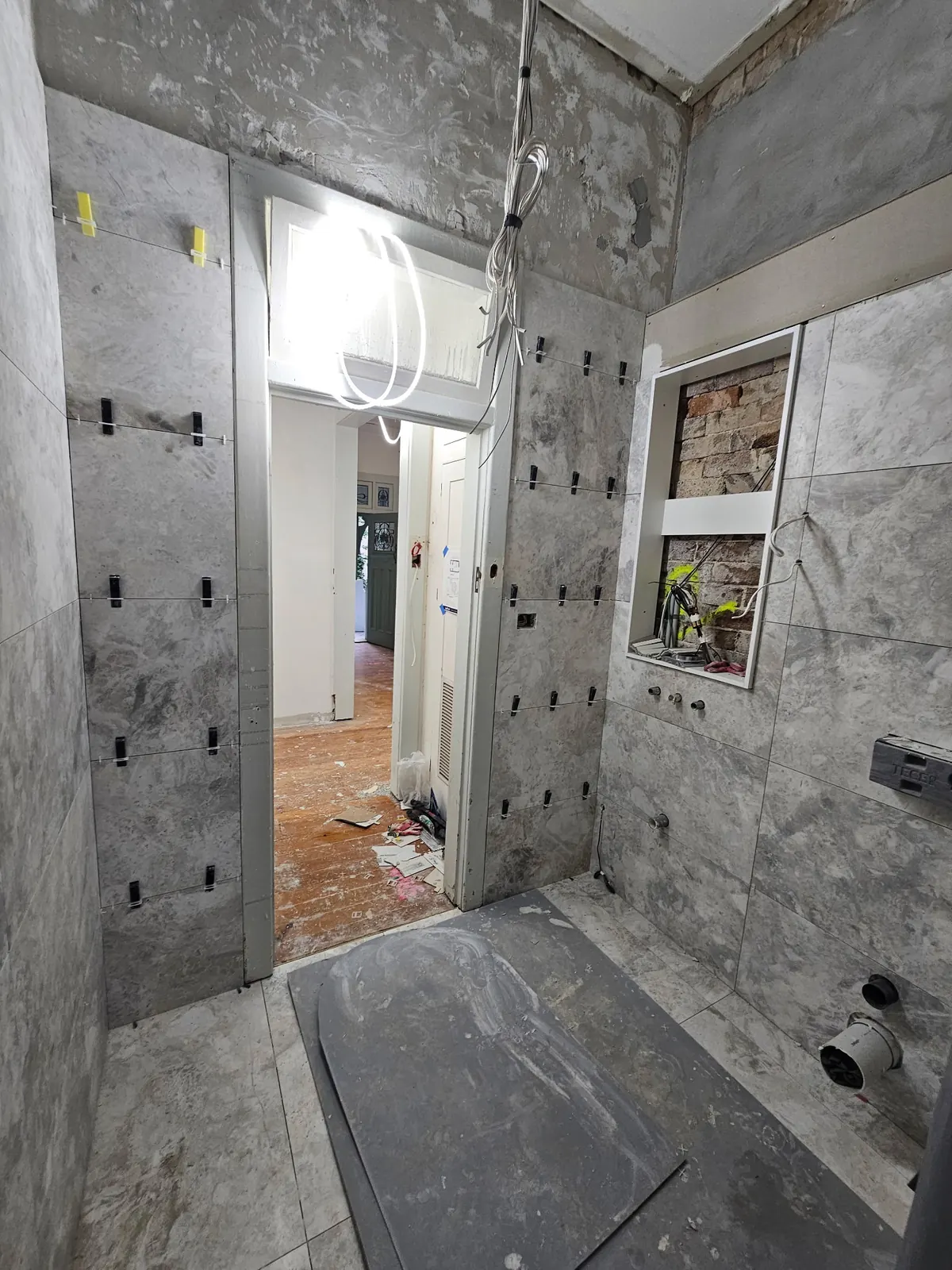
Water travels. A damp patch on a bedroom wall might be coming from a shower three metres away, a balcony above, or a failed junction around a window. Guessing is expensive, so we start by working out where it is actually getting in.
If a job is beyond a tiling and waterproofing fix — structural movement, a plumbing fault, roof or facade issues — we will say so and point you at the right trade rather than sell you a repair that will not hold.
Photos of the damage and where it appears will get you a useful answer quickly.